


Light
Caustics
The bright, colored patterns that glass and liquid focus onto a table. Auddomate traces them from the sun itself, so they come out sharp and clean.
Light, focused by glass
Stand a glass of rum on a table in the sun and you'll see more than its shadow. Inside the shadow there's a pool of warm, golden light, with bright lines where the curves of the glass focus the sun. Those patterns are caustics, and they're one of the most beautiful things light does.
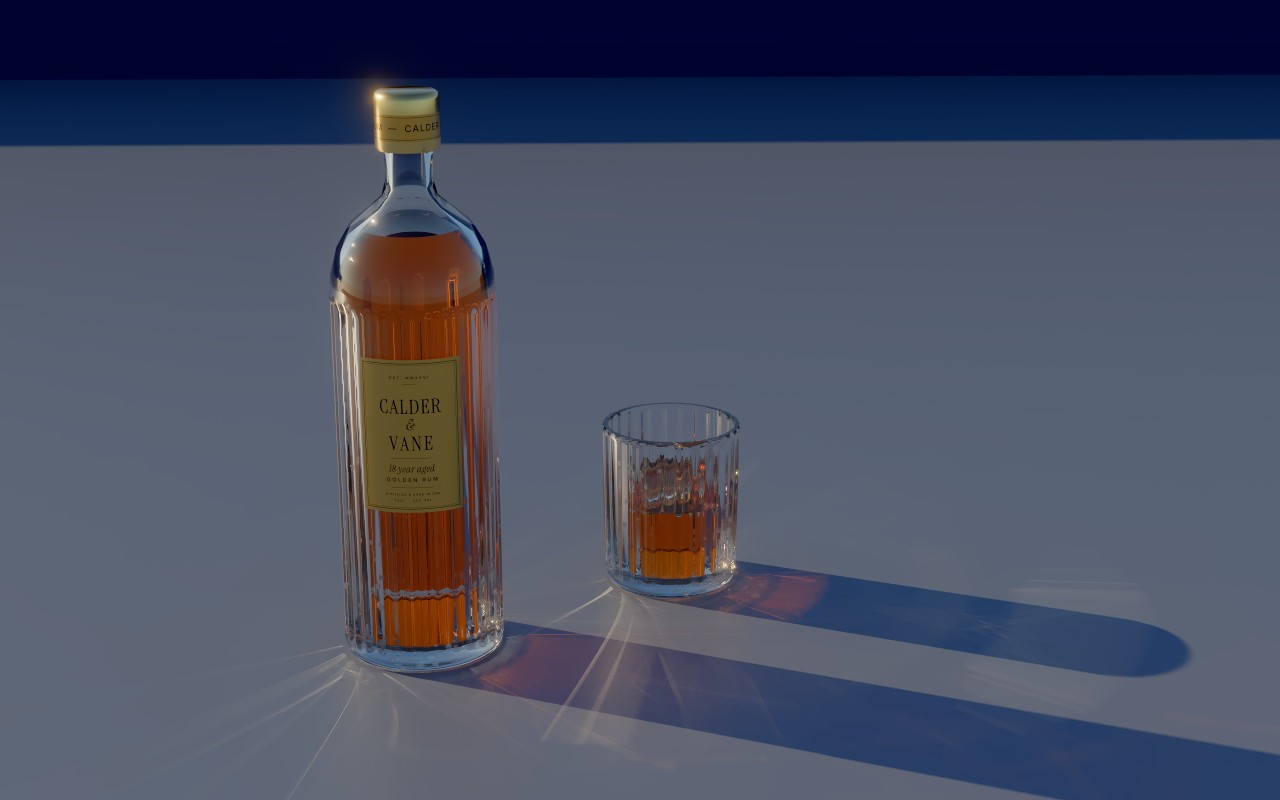
Traced from the sun
Most renderers find caustics by luck. They follow light backwards from the camera, and only once in a long while does a path happen to bounce off the table, pass through the glass and land exactly on the tiny sun. The result is a scatter of sparkles that takes hours to settle, if it ever does.
Auddomate also follows light forwards. Every moment it renders, it sends light out from the sun, aimed only at the glass and liquid in your scene. That light bends, reflects and takes on color exactly as it would in the real world, lands on the table, and is joined to the camera. The two directions share the work without ever counting the same light twice, so caustics come out sharp and clean in seconds.
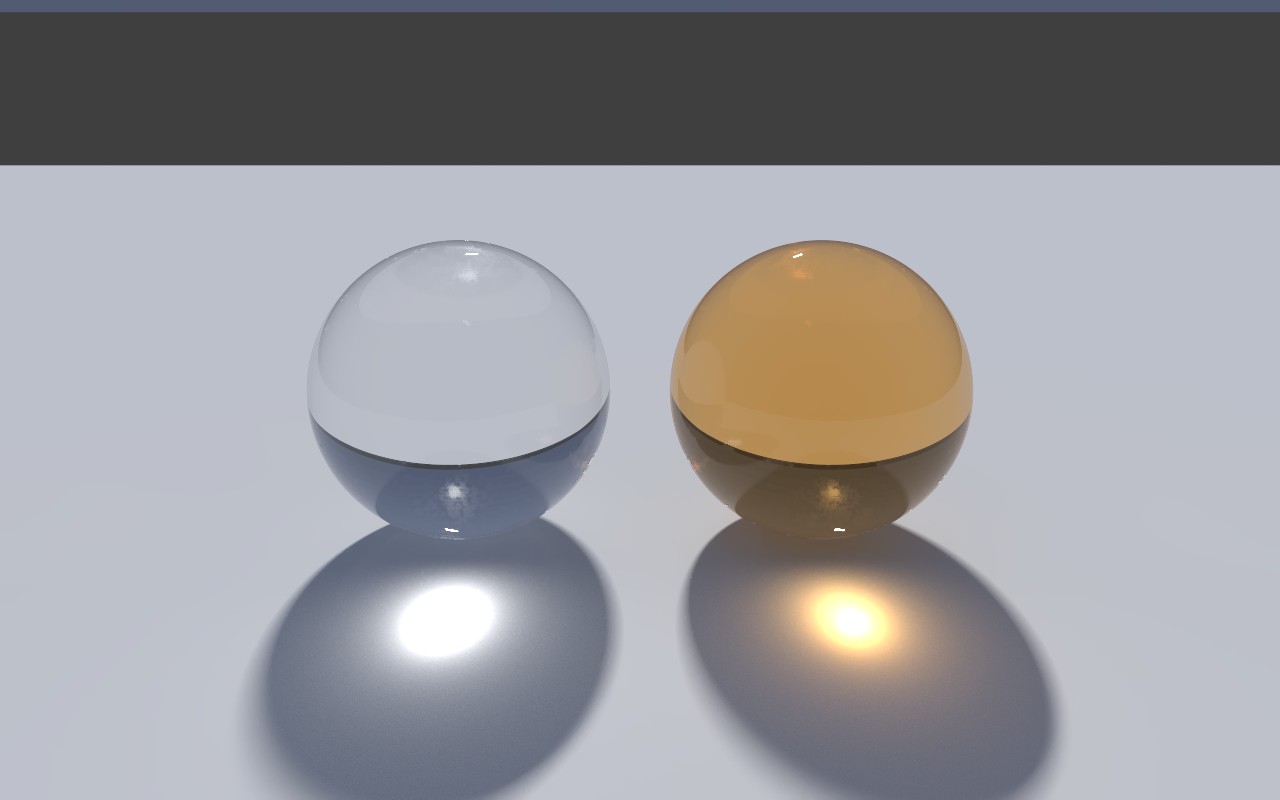
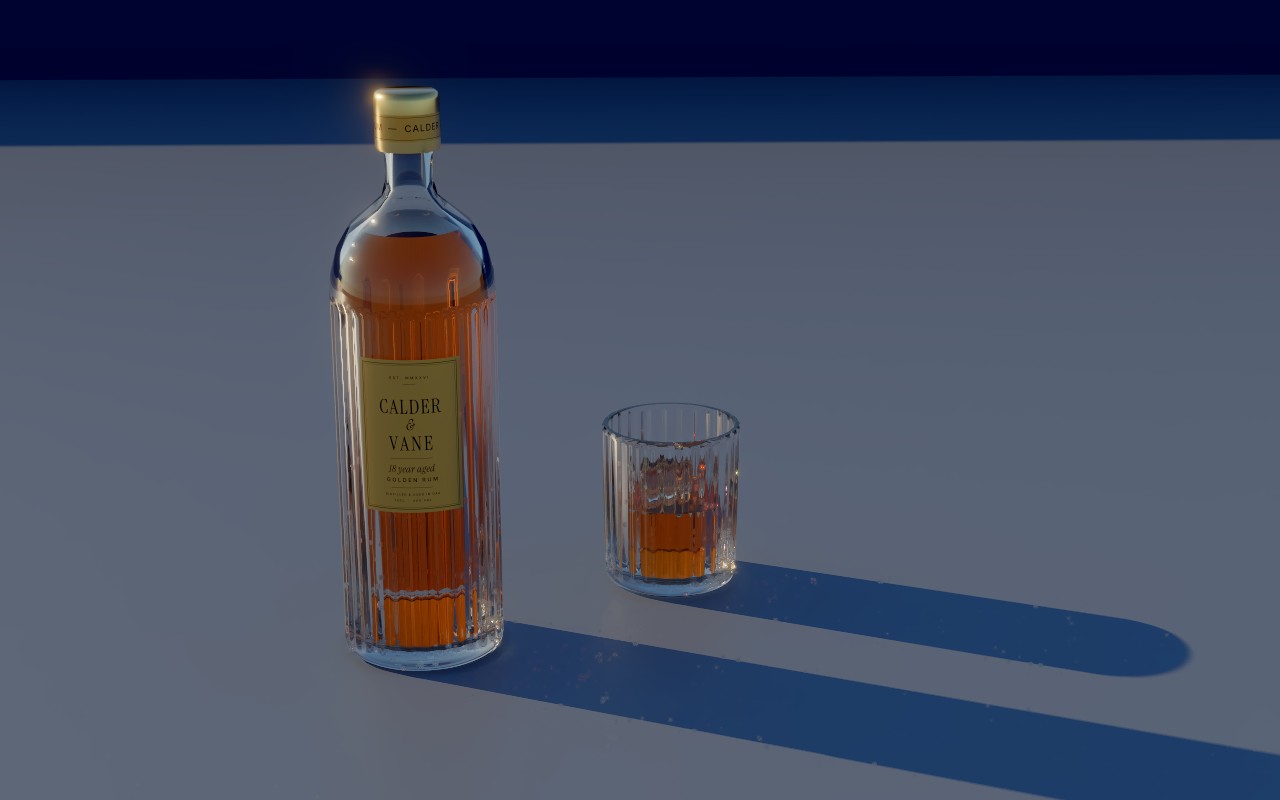
When you get them
Caustics appear by themselves whenever three things meet:
- A sun: the Physical sky, a studio light with a bright key, or any HDRI or file with one small, very bright light.
- Glass or liquid: solid or thin glass, water, rum, gemstones, or anything with see-through texture.
- A surface to fall on: a table, a floor, a wall, the label of the bottle beside it. Matte and satin surfaces get the sharp, traced caustics; on near-mirror surfaces, like a polished floor, caustics are found the ordinary way and take longer to clean up.
The Caustics switch in the Render tab is on by default. Turn it off only to compare, or to match a render made before Auddomate 2.31. Colored liquid makes colored caustics: set it under Scene → Materials, as described in Materials.